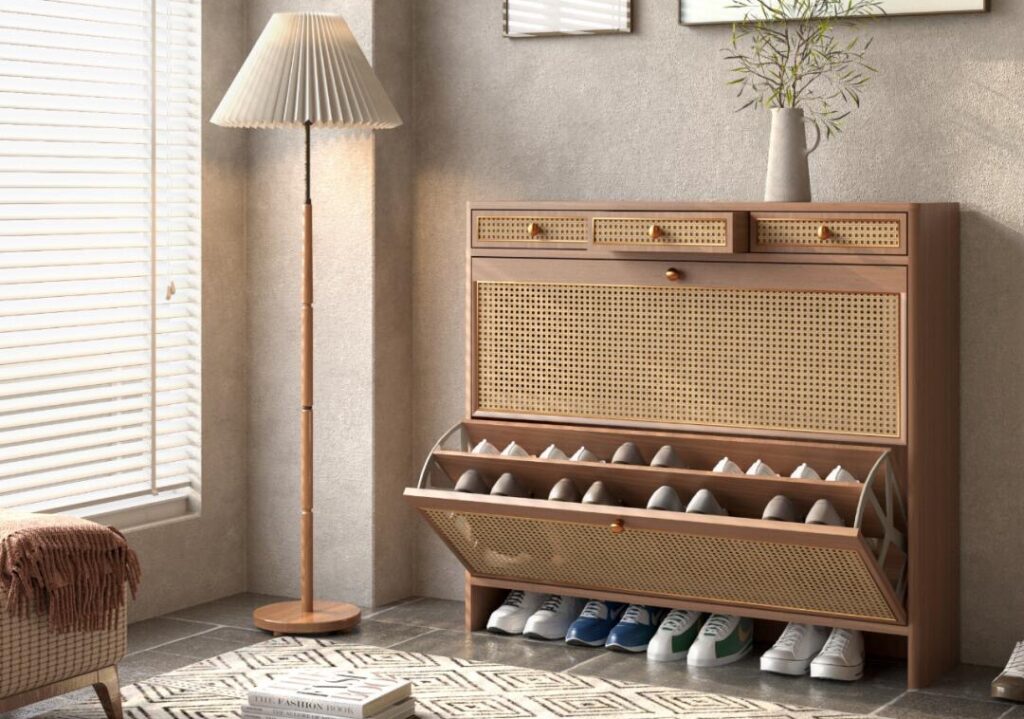
In the evolving world of contemporary interiors, where designers search for materials that speak not only through shape but through sensation, rattan texture has become a language of its own. It is tactile, expressive, organic, and endlessly interpretive—an art form shaped through touch as much as through sight. Unlike sleek metals or polished plastics, rattan carries the imprint of its origins: the forests, the humidity, the hands that guide every strand into its woven rhythm.
Today, the use of rattan fabric, rattan mesh, rattan webbing, and even rattan by the meter has expanded beyond traditional crafting into a rich vocabulary of modern design. Its presence is soft but undeniable—a subtle gesture of nature woven into the geometry of contemporary architecture.
This is more than a material trend. It is a return to humanity, to craftsmanship, to texture.

1. The Power of Rattan Texture in Modern Spaces
At the heart of rattan’s appeal lies its texture. Rattan texture is not just a visual pattern—it is a feeling. Run your palm across it, and you immediately sense the interplay of firmness and flexibility, warm fibers and airy spaces. This texture brings life to any surface it touches.
In a minimalist living room, rattan texture adds warmth.
In a modern bedroom, it introduces softness.
In a glass-and-steel office, it brings balance.
Designers often describe rattan as a “breathing material” because of its organic openness. Its woven patterns allow air and light to move through it, creating shifting shadows that dance across floors and walls—subtle, poetic moments that make a space feel human.
The popularity of rattan texture in modern design comes from three qualities:
Natural Warmth
The honey tons of raw rattan soften stark interiors and reduce the coldness of synthetic surfaces.
Organic Imperfection
Tiny variations in every strand ensure that no two pieces are identical embracing the beauty of handcrafted detail.
Timeless Versatility
Equally at home in Japandi, Scandinavian, bohemian, modern organic, or tropical contemporary aesthetics, rattan bridges cultural boundaries through its simplicity.
Rattan is texture as emotion—and emotion is the heart of good design.
2. Rattan Fabric: The Evolution of a Traditional Craft
Among all rattan expressions, rattan fabric has become one of the most innovative. Flexible, lightweight, and surprisingly strong, it functions like a textile made from nature’s own fibers. Unlike synthetic fabrics, rattan fabric has structure—an architectural quality that makes it suitable for both form and function.

Modern designers use rattan fabric for:
- upholstery panels
- cabinet and wardrobe doors
- curved chair backs
- headboards
- delicate partition screens
- artisanal lighting
Its woven surface has a soft geometry—structured but breathable, tactile but refined. When light filters through it, the patterns create a soft ambience that enhances the mood of the room.
What makes rattan fabric unique is its ability to behave like a fabric while still maintaining the strength of natural rattan. It bends, moves, and adapts, yet retains a firmness that ensures durability.
As eco-conscious consumers shift toward sustainable materials, rattan fabric stands out as both earth-friendly and visually compelling—a rare combination in modern interior materials.
3. Rattan Mesh: The Art of Negative Space

If rattan fabric is the gentle side of woven fiber, then rattan mesh is its architectural counterpart. With its open-grid structure, rattan mesh relies on negative space as much as positive form. The result is a material that feels airy, sculptural, and dimensional.
Designers often choose rattan mesh for:
- contemporary chairs and stools
- room dividers
- ceiling panels
- modern wardrobe and shoe cabinets
- wall art installations
- acoustic panels
The magic of rattan mesh lies in how it interacts with light. Sunlight passing through the mesh creates delicate lattice shadows—graphic and soft at the same time. In artificial lighting, the shadows become more dramatic, forming shapes that shift throughout the day.
In modern design, where transparency and lightness are prized, rattan mesh becomes a medium through which space can breathe. It is both a texture and a spatial tool—allowing designers to shape light, divide rooms, and emphasize softness without creating visual heaviness.
4. Rattan Webbing: A Modern Icon Reborn
Perhaps no material has shaped the global revival of rattan as much as rattan webbing. Also known as cane webbing or cane mesh, it is instantly recognizable by its classic hexagonal pattern. Rattan webbing is traditional, yes—but today, it is also one of the most modern materials used in interior design.
Its appeal is timeless:
- the rhythmic geometry
- the slight sheen of polished cane
- the balanced ratio of solid and open space
- the luxurious but natural appearance
Rattan webbing is now central to modern cabinetry. Sideboards, bedside tables, media consoles, and kitchen cabinets often feature rattan webbing panels framed in wood or metal. The result is a look that merges minimalism with artisanal tradition.
Why has rattan webbing become so iconic?
Its geometry is universally pleasing.
The hexagonal pattern feels mathematical and organic at the same time.
Its texture elevates simple furniture.
A plain wooden cabinet instantly becomes a design piece when fitted with rattan webbing.
Its lightness creates functional elegance.
Webbing reduces visual weight, allowing furniture to feel airy and modern.
In contemporary interiors, rattan webbing is no longer a nostalgic material—it’s a design signature.
5. Rattan by the Meter: Customization for Designers and Creators
As demand for natural textures increases, many creators now prefer to purchase rattan by the meter. This format provides freedom and adaptability. Designers, interior stylists, furniture makers, and even DIY enthusiasts can shape rattan to suit their specific visions.
Buying rattan by the meter allows for:
- custom paneling
- bespoke cabinetry
- artistic installations
- furniture redesign
- architectural accents
- wall-mounted textures
- creative lighting
It empowers experimentation. Want to wrap a cylindrical lamp? Easy. Need a custom-sized wardrobe panel? Possible. Planning a full wall of texture? Achievable.
Rattan by the meter unlocks new possibilities—especially in modern spaces that value unique, handcrafted aesthetics.
6. The Sensory Dimension of Rattan in Modern Design
Rattan is not merely a visual element—its textures invite multi-sensory experiences. This sensory quality is one reason modern design embraces rattan so strongly.
Touch
The surface can be smooth, gently ridged, tightly woven, or loosely meshed—each pattern expressing a different tactile mood.
Sound
When bent, rattan emits a soft, organic creak—subtle but grounding, a reminder of its natural origin.
Light
Few materials interact with light as poetically as rattan. Whether in the form of webbing, mesh, or fabric, it filters light to produce gentle, shifting shadows.
Atmosphere
Rattan creates warmth without heaviness, texture without clutter, and detail without noise—making it ideal for modern interiors that aim for serenity and simplicity.

7. The Future of Rattan Texture in Modern Interior Design
As design trends move toward biophilic concepts, sustainability, and handcrafted materials, rattan will continue to gain global influence. Key future trends include:
- sculptural rattan forms
- oversized weaving patterns
- mixed-material combinations like rattan + metal + glass
- architectural rattan panels for walls and ceilings
- luxury interpretations of traditional rattan textures
Rattan’s versatility ensures its relevance in both artisanal and luxury markets. What began as a craft material has become an emblem of conscious, tactile, nature-inspired living.
Conclusion: Rattan Texture as the Poetry of Modern Design
In modern interiors, rattan texture is more than a decorative detail. It is a medium through which spaces breathe, communicate, and express calm. The refined elegance of rattan fabric, the architectural strength of rattan mesh, the iconic charm of rattan webbing, and the creative flexibility of rattan by the meter together form a material world rich with aesthetic potential.
Rattan is texture, structure, tradition, and innovation—woven into one.
It reminds us that design can be modern without losing its soul.
That interiors can feel soft without sacrificing clarity.
And that the most powerful materials are often the simplest ones—shaped by hand, illuminated by light, and inspired by nature itself.