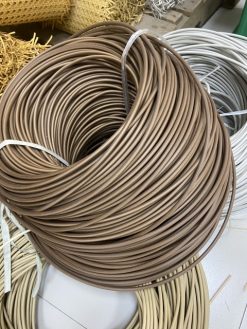
The appeal of cane webbing has never faded. Its lightweight openness, organic texture, and timeless woven aesthetic continue to dominate interior and hospitality design worldwide. Yet despite its popularity, natural cane presents clear performance limitations. Exposure to humidity, chlorine, salt air, or direct sunlight gradually weakens the organic fibers. In many cases, the material begins to sag, discolor, and deteriorate long before the furniture reaches the end of its intended service life. As modern projects push into more demanding environments - outdoor lounges, coastal resorts, wellness spaces, high-traffic commercial interiors—the industry has shifted toward more durable alternatives. PVC cane webbing and other forms of synthetic cane webbing have become indispensable materials for manufacturers and designers who require consistent performance without sacrificing visual warmth. This material preserves everything people love about traditional cane while solving the durability challenges that natural rattan cannot overcome.

PVC Cane Webbing Material Engineered for Today’s Environments

Colorful PVC cane webbing
PVC cane webbing is produced from Polyvinyl Chloride—a polymer specifically valued for stability, flexibility, and resistance to moisture. When formulated correctly, PVC becomes a long-lasting material capable of withstanding outdoor conditions that would quickly destroy natural cane. Many manufacturers also use Polyethylene (PE) in similar woven applications. PE shares the same lightweight qualities and chemical stability, offering strong resistance to fading and structural fatigue. Both polymers can be extruded into refined, consistent strands, allowing the finished mesh to retain a clean, precise appearance across large production runs. Compared with these engineered polymers, paper cane webbing occupies an entirely different category. Made from twisted cellulose fibers and sometimes coated with wax, paper cane is primarily an interior-only material and offers no meaningful resistance to moisture. While inexpensive, it is unsuitable for hospitality, exterior installations, or commercial spaces where long-term durability is required. PVC and PE remain the professional standard for projects where performance is non-negotiable.

PVC Cane Webbing Performance That Outlasts Natural Rattan

The growing preference for synthetic cane webbing is not simply a trend—it is the result of proven material behavior in real-world conditions. PVC cane webbing withstands the kinds of challenges that consistently shorten the lifespan of natural cane. One of the most significant advantages is its complete resistance to water absorption. PVC does not swell, soften, or stretch when exposed to humidity or heavy rains. For outdoor lounges, resort pool areas, spas, and marine applications, this stability is crucial. Furniture maintains its tension, comfort, and visual appeal even through prolonged periods of moisture.
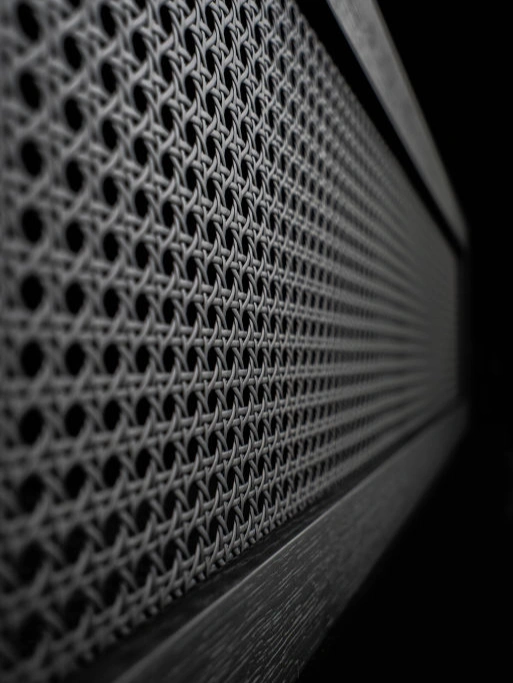
Combine black PVC cane webbing with black industrial wood
Commercial hygiene requirements also play a role in the preference for synthetic cane. PVC and PE do not harbor mold or mildew and are unaffected by common cleaning chemicals. From beachfront restaurants to wellness facilities, the ability to sanitize furniture without causing material damage reduces operational concerns and lowers replacement frequency. Maintenance practices are equally straightforward. Whereas natural cane may require soaking, re-tightening, or special cleaning treatments, synthetic cane webbing only needs simple washing with water and mild soap. For businesses managing hundreds of seating units, this ease of care translates into significant labor and long-term cost efficiencies. Finally, PVC cane webbing remains cost-effective compared with imported natural cane, offering predictable bulk pricing and far longer service life. For procurement teams working on contract furniture, resorts, or public seating projects, the improved return on investment is substantial.

PVC Cane Webbing: Design Flexibility and Aesthetic Realism

Advanced extrusion technology has allowed synthetic cane webbing to evolve far beyond its early plastic-like appearance. Today’s PVC cane webbing can replicate the subtle fibers, tonal variation, and depth of natural rattan with impressive accuracy. At a normal viewing distance, most users cannot distinguish synthetic from natural.
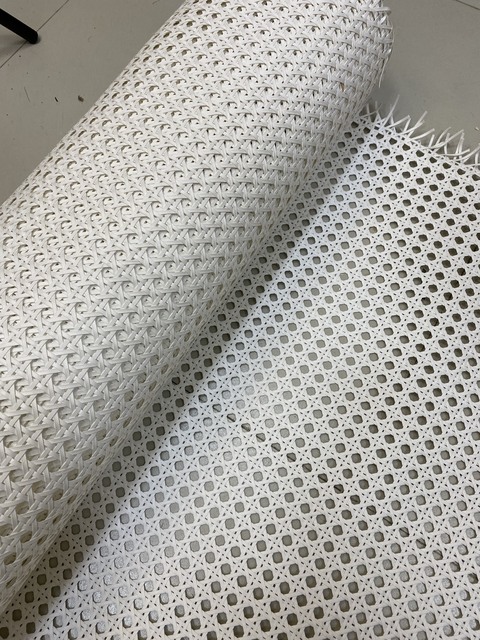
PVC cane webbing with uniform color and shade
Another major advantage is color consistency. Natural cane varies significantly between batches and continues to change as it ages. This inconsistency becomes a challenge for large-scale projects that require uniformity across thousands of pieces. Synthetic cane webbing eliminates this inconsistency, ensuring the same shade and finish throughout long production cycles. Designers working on branding-driven spaces or contemporary interiors can also benefit from custom colors. PVC can be produced in virtually any tone—soft beige, charcoal grey, navy blue, matte black, or even metallic finishes. These options offer creative flexibility far beyond the limitations of natural materials. Machine-woven synthetic webbing also guarantees precise tension and uniform hole sizing. This level of consistency is essential for manufacturers producing furniture at scale, where even small variations can affect quality control or product comfort.

Where PVC Cane Webbing Performs Best?

PVC and PE cane webbing excel in challenging environments that demand both durability and design appeal.
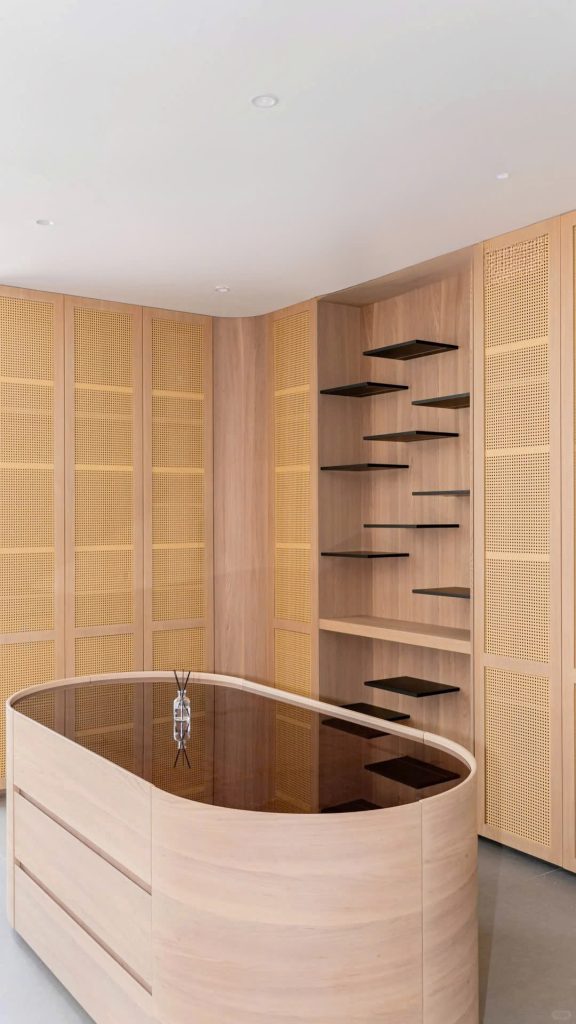
Application in display cabinets
Outdoor furniture remains one of the largest application categories. In resort decks, beach clubs, garden seating, and poolside lounges, the material endures direct sunlight, storms, chlorinated water, and extreme humidity with minimal change in appearance or structure. Property managers appreciate that the furniture can remain outdoors year-round without accelerated wear. Moisture-heavy indoor environments such as spas, saunas, hotel bathrooms, and wellness centers also benefit from synthetic cane. The material resists swelling and mold growth, providing long-term stability in conditions that natural cane cannot tolerate. For high-traffic commercial areas—cafés, airport lounges, food courts, and university spaces—the material offers both comfort and exceptional structural resilience. Frequent cleaning, constant use, and physical impact do not compromise the integrity of the woven structure. The marine sector has embraced synthetic cane for similar reasons. In yacht interiors and coastal structures, the material maintains the classic nautical look while eliminating the risks of mildew or deformation due to salt air and fluctuating humidity.

Things To Keep In Mind When Buying PVC Cane Webbing

PVC Cane Webbing Vilata
While PVC cane webbing is broadly available, quality levels differ significantly between manufacturers. Poorly formulated synthetics can fade quickly, become brittle, or emit odors from low-quality plastic compounds. To ensure long-term performance, procurement professionals should prioritize webbing that demonstrates consistent strand thickness, stable color, and precise weaving. High-grade PVC formulations should include certified UV stabilizers and non-toxic ingredients suitable for hospitality and commercial projects. Real samples should always be reviewed to evaluate hand-feel, color depth, flexibility, and overall structural stability before large orders are placed. Choosing a reputable supplier ensures predictable performance, fewer warranty claims, and better overall customer satisfaction.

Contact

VILATA COMPANY LIMITED
  • Address: Office 02, Pearl Plaza Building, 561A Dien Bien Phu, Ward 25, Binh Thanh District, Ho Chi Minh City, Vietnam
  • Website: rattanvn.com 
  • Email: min.vilata@gmail.com 
  • Phone: +84.394.090.698
  • Facebook: (1) Facebook
All in one
Liên hệ ngay