● Vietnam Raw Material Supplier · Est. 2020

Rattan Material —
Natural, Grade-A Quality
Direct from Vietnam

Rattan cane · Rattan core · Rattan peel · Rattan reed
Wholesale B2B supply for furniture manufacturers in US, EU & Canada.
MOQ from 1 bundle. Free sample dispatched in 48 hours.

★★★★★

“Consistent Grade A quality. 3 containers shipped, zero issues.”

— Michael R., Furniture Importer, Los Angeles CA

Request Free Sample → Download Spec Sheet
4 Products
Cane · Core · Peel · Reed

5+

Years supplying

20+

Export countries

Grade A/B/C

Quality tiers

100 kg

Min. wholesale

48h

Sample dispatch

What is rattan material?

Rattan material is the collective term for raw products derived from the rattan vine (Calamus spp.) — a fast-growing, solid-stemmed climbing palm native to tropical forests in Vietnam, Indonesia and the Philippines. Unlike bamboo, which is hollow, rattan has a dense, flexible core that makes it exceptionally strong for furniture construction. The vine is processed into four distinct commercial materials: rattan cane (the peeled outer skin), rattan core (the inner pith), rattan peel (flat strips from the skin), and rattan reed (narrow strips for weaving). Each serves a different function in furniture manufacturing, upholstery, basketry and interior design.

🌿 Botanical name

Calamus spp. (Arecaceae family)
Primary species: C. caesius, C. manan, C. trachycoleus
Origin: Vietnam · Indonesia · Philippines

♻️ Sustainability

Regrows from root after harvest — does not kill the plant.
5–7 year harvest cycle.
One of the world’s most sustainable furniture materials.

Four Raw Materials. One Complete Source.

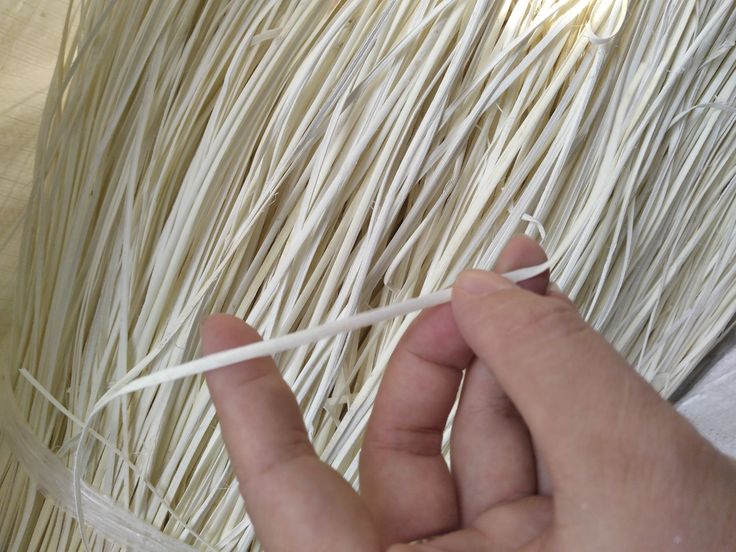
Rattan Cane

(Rattan Peel · Rattan Skin)

Rattan cane is the hard, glossy outer bark of the rattan vine, peeled from the pole into thin, flat strips. Also called rattan peel or rattan skin. It is the only material used to produce authentic cane webbing.

What furniture manufacturers use it for:

  • Cane webbing panels for cabinet doors and headboards
  • Binding and wrapping of furniture joints and legs
  • Structural chair back and seat surfaces (seat caning)
  • Vintage and antique furniture restoration
  • Fine decorative inlay work on luxury furniture
Width (strips) 1.5mm · 2mm · 2.5mm · 3mm · custom
Form Flat strips, rolled or bundled
Surface Glossy, smooth, closed-pore
Color Natural honey · Bleached · Smoked dark
Grade A · B · C
MOQ 50 kg per grade
Moisture ≤14% (export standard)

Request Rattan Cane Sample →

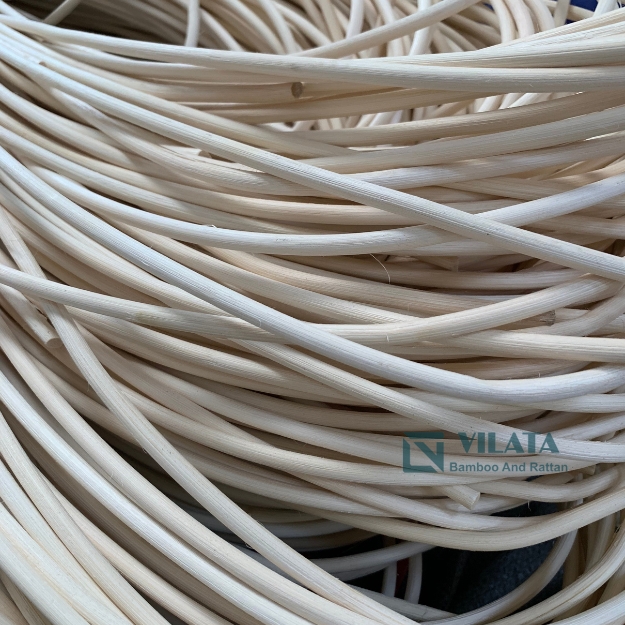
Rattan Core

(Round Reed · Rattan Pith)

Rattan core is the soft, porous inner pith of the rattan vine, cut into round strips after the outer skin is removed. It is the fundamental element of wickerwork — used as the woven infill in furniture panels and as the primary material for basket weaving.

What furniture manufacturers use it for:

  • Woven decorative infill for chair backs and furniture panels
  • Basket weaving (spokes and weavers)
  • Traditional wicker furniture construction
  • Craft supply for caning studios and furniture restorers
  • Reinforcing structural elements in rattan furniture frames
Diameter 1mm · 1.5mm · 2mm · 2.5mm · 3mm · 4mm · 5mm · 6mm
Form Round strips, bundled per 500g or 1kg coil
Surface Natural matte, lightly sanded
Color Natural · Bleached · Medium Brown
Grade A · B · C
MOQ 50 kg per diameter
Best use Indoor furniture, craft, restoration

Request Rattan Core Sample →

Rattan Peel

(Flat Reed · Rattan Skin Strip)

Rattan peel refers to wider, flat strips machined from the outer skin of the rattan pole. Distinct from narrow cane strips, rattan peel is broader and used for flat-weave surfaces, chair seat weaving, and the production of rattan cane webbing rolls.

What furniture manufacturers use it for:

  • Flat-woven chair seat surfaces (traditional pressed cane)
  • Production raw material for cane webbing manufacturing
  • Wide decorative flat-weave panels in contemporary furniture
  • Laminated surfaces on rattan furniture
  • Hand-weaving projects requiring wider material
Width (strips) 4mm · 6mm · 8mm · 10mm · 12mm
Form Flat strips, bundled
Surface Smooth both sides, uniform thickness
Color Natural · Bleached
Grade A · B
MOQ 50 kg per width
Thickness 0.8mm – 1.2mm

Request Rattan Peel Sample →

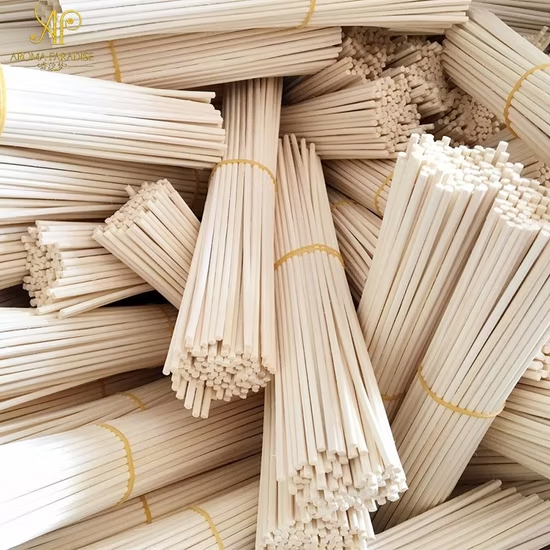
Rattan Reed

(Round Reed · Seagrass Reed)

Rattan reed is the general trade name for narrow strips and rounds used in basket weaving and seat weaving. VILATA supplies both natural rattan reed and seagrass reed — two distinct materials often grouped under the same trade term in US and EU markets.

What manufacturers use it for:

  • Traditional Nantucket basket weaving (round reed)
  • Chair seat weaving (flat reed and half-round reed)
  • Decorative woven borders and frames
  • Craft supply distribution to weaving schools and studios
  • Structural spokes in flat and round basket forms
Profiles Round · Flat · Half-round · Oval
Sizes (round) #0 · #1 · #2 · #3 · #4 · #5 · #6 · #7 · #8
Sizes (flat) 3/16″ · 1/4″ · 3/8″ · 1/2″ · 5/8″ · 3/4″
Form Coiled bundles, 250g or 500g
Color Natural · Smoked · Bleached
MOQ 30 kg per profile/size
Applications Basketry, chair caning, restoration

Request Rattan Reed Sample →

Which Rattan Material Is Right for Your Application?

Use this reference table to specify the correct material for your procurement. All four materials are available from VILATA — one supplier, one shipment, complete documentation.

Features Rattan Cane (Peel/Skin) Rattan Core Rattan Peel (Flat Reed) Rattan Reed
Part of vine Outer bark Inner pith Outer bark (wider) Core or bark strip
Form Narrow flat strips Round strips Wide flat strips Round/flat/half-round
Surface Glossy, smooth Matte, porous Smooth, uniform Natural, lightly sanded
Primary use Cane webbing, binding Wickerwork, baskets Chair seats, flat weave Basket weaving, restoration
Indoor/Outdoor Indoor Indoor Indoor Indoor
Key width/size 1.5–3mm 1–6mm ø 4–12mm #0–#8 or 3/16″–3/4″
Grade options A · B · C A · B · C A · B Natural/Bleached/Smoked
MOQ 50 kg 50 kg 50 kg 30 kg
Typical buyer Webbing factories, furniture makers Wicker furniture makers, craft suppliers Chair seat weavers, panel makers Basket weavers, restoration specialists

From Forest to Factory

How Vietnam Rattan Becomes Your Material

01

Harvest

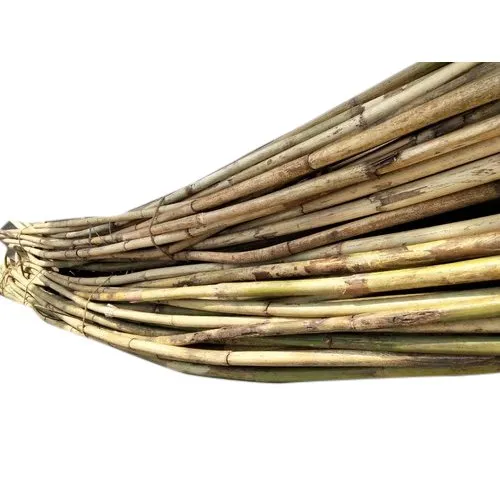
Mature rattan poles (5–7 years) are selectively cut from managed forests in central and southern Vietnam. Harvesting does not kill the root system — new poles regrow within 2 years. Average pole diameter: 20–40mm. Average harvested length: 4–6 meters.

02

Processing

At VILATA’s facility, poles are sorted by diameter. The outer skin is machine-peeled to produce cane and peel strips. The inner pith is cut into round core strips. Reed profiles are cut, shaped and bundled. Each batch is kiln-dried to ≤14% moisture content for export compliance.

03

Grading & QC

Every batch undergoes manual grading (A/B/C) for diameter consistency, surface smoothness, and color uniformity. Grade A material is measured to ±0.2mm diameter tolerance. Moisture content is tested with a calibrated digital moisture meter. Failed batches are downgraded or rejected.

04

Export

Material is bundled, labelled with grade and specification, and packed in moisture-resistant cartons. Phytosanitary certificates issued by Vietnam’s Plant Protection Department are included with every natural rattan shipment. Standard container: 20ft FCL or LCL groupage.

Vietnam: The World’s Second-Largest Rattan Exporter

Vietnam holds approximately 12% of global rattan exports, second only to Indonesia. The country’s central highlands — particularly Quảng Nam, Quảng Bình, and the Central Highlands provinces — produce some of the finest natural rattan commercially available.

Vietnamese rattan (primarily Calamus caesius and Calamus manan) is prized for its:

  • Density and straightness: Vietnamese poles have fewer natural bends than Indonesian equivalents, reducing waste during processing.
  • Color consistency: Natural honey tone that bleaches and dyes evenly.
  • Export infrastructure: Established logistics via Đà Nẵng and Hồ Chí Minh City ports to US, EU and Australian markets.
  • Legal compliance: Vietnam’s FLEGT Voluntary Partnership Agreement framework provides internationally recognized timber legality documentation.

Annual rattan export value from Vietnam: approximately USD 250–300 million (2023 data, Vietnam Timber and Forest Product Association).

VILATA — Raw Material Specialist Since 2020

VILATA MTV Co. Ltd is not a trading company — we are a processor and direct exporter of rattan raw materials. This distinction matters for B2B buyers because it means:

  • Direct pricing: No middleman margin between forest and your factory.
  • Grade control: We grade every batch ourselves, not a third-party agent.
  • Custom specifications: Diameter ranges, lengths, and moisture targets tailored to your production needs.
  • Consistent supply: Standing agreements with harvesting cooperatives ensure supply continuity through seasonal variations.
  • Documentation: Phytosanitary certificates, CO, and commercial invoices prepared in-house.

Who Buys Rattan Raw Material from VILATA

🏭 Furniture Manufacturers

You manufacture rattan, wicker or cane furniture for export markets. You need consistent Grade A material, reliable lead times, and full export documentation for customs clearance.

What you order from us:

  • → Rattan cane (for webbing production)
  • → Rattan core (for wicker weaving)
  • → Rattan poles (for frame bending)
  • → MOQ: 100 kg per material type

Typical clients: furniture factories in Poland, Germany, US importers with overseas production.

✂️ Craft & Restoration

You supply caning studios, chair restoration specialists, basket weaving schools or craft retailers in the US and EU. You need smaller quantities in multiple sizes with fast dispatch.

What you order from us:

  • → Rattan reed (round and flat, full size range)
  • → Rattan core (all diameters #0–#8)
  • → Rattan cane strips (1.5–3mm)
  • → MOQ: 30 kg per size

Typical clients: US craft distributors, UK caning supply shops, EU restoration supply companies.

📐 Interior Contractors

You specify natural materials for hospitality projects, residential interiors, or retail fit-outs. You need material samples, technical data sheets and flexible ordering for project-based procurement.

What you order from us:

  • → Rattan cane webbing (for cabinet panels)
  • → Rattan peel flat strips (for woven wall panels)
  • → Custom sizes and colors
  • → MOQ: negotiable for project quantities

Typical clients: hotel FF&E procurement, interior design studios, architectural millwork shops.

★★★★★

“We’ve sourced rattan cane from VILATA for two years. Grade A consistency is exactly what we were promised — diameter tolerance is tight, moisture content is always within spec. Shipping documentation has been flawless for US customs clearance.”

James W. Procurement Manager · Natural Fiber Furniture Co.
Portland, Oregon, USA
★★★★★

“As a caning supply distributor in the EU, consistency across batches is critical for our studio customers. VILATA’s rattan core and reed sizes match the labeling every time. We’ve placed 8 orders, zero surprises.”

Annelies V. Director · Restoration Materials Benelux
Antwerp, Belgium
★★★★★

“We specified rattan peel strips for a 40-room hotel renovation project. VILATA accommodated a custom width requirement, delivered on time, and provided all the documentation our interior contractor needed. Will use again.”

Sarah M. FF&E Project Manager · Hospitality Design Studio
London, UK

Rattan Material — Frequently Asked Questions

Technical questions from furniture manufacturers, craft suppliers and interior contractors answered by our export team. If your question isn’t here, reach us directly — we respond to all trade enquiries within 4 business hours.

Q1: What exactly is the difference between rattan cane, rattan peel, and rattan skin?

They are three names for the same product: the hard outer bark of the rattan vine, peeled into thin strips. In the US market, “rattan cane” and “cane strip” are most common. In the EU market, “rattan peel” and “rattan skin” are often used. All refer to the same raw material. VILATA uses “rattan cane” as the primary product name for international clarity.

Q2: What is rattan core and how is it different from rattan cane?

Rattan core (also called round reed, rattan pith, or inner reed) is the soft, spongy inner part of the rattan vine — the material remaining after the hard outer skin is peeled off. It has a natural matte surface and circular cross-section. Rattan cane is the hard, glossy outer skin. Core is used for wickerwork and basket weaving; cane is used for webbing, binding and chair caning. They come from the same vine but serve entirely different functions.

Q3: What is rattan reed and is it the same as rattan core?

Rattan reed is a broad trade term covering several products: round reed (which is cut from rattan core), flat reed (cut from rattan peel), half-round reed, and oval reed. So “rattan reed” can refer to core-derived or peel-derived products depending on the profile. When ordering, always specify: round reed, flat reed, or half-round reed — and the size number or dimension. VILATA supplies all profiles.

Q4: What is VILATA's minimum order for rattan material?

Sample orders: 1 bundle (5–10 kg per material type). Suitable for testing quality before placing a wholesale order. No minimum value, sample price applies.

Wholesale orders: 100 kg minimum per material type for standard grades and sizes. Custom specifications (custom diameters, lengths, or treatments): 500 kg minimum.

Mixed material orders (e.g. 100 kg cane + 50 kg core + 50 kg reed) are accepted and count toward our minimum combined.

Q5: Do you supply bleached rattan material?

Yes. VILATA supplies bleached rattan cane, bleached rattan core and bleached rattan peel. Bleached material undergoes a controlled hydrogen peroxide process that produces a consistent pale cream-white color while preserving fiber integrity. It is widely used in Scandinavian-style furniture and light-colored interior projects. Bleached material is available in Grade A and B. MOQ same as natural grades.

Q6: Can rattan material be used outdoors?

Natural rattan (cane, core, peel, reed) is not suitable for outdoor or high-humidity applications. Prolonged moisture exposure causes the fibers to swell, crack and deteriorate. For outdoor furniture applications, we recommend our PVC/PE synthetic rattan webbing or synthetic rattan strands, which are UV-stable and weatherproof. For covered outdoor settings (screened porches, covered patios), natural rattan can be used with appropriate finishing treatments.

Q7: What export documentation does VILATA provide?

Standard documentation with every shipment: Commercial Invoice, Packing List, Bill of Lading (or Airway Bill for air freight), Certificate of Origin (C/O) issued by Vietnam Chamber of Commerce.

Phytosanitary Certificate: Provided upon request for all natural rattan materials — required for import into US, EU, Australia and most countries. Issued by the Vietnam Plant Protection Department.

Additional documentation (CITES, FSC chain of custody, lab test reports) is available upon request for specific markets or buyer requirements.

Q8: How long does shipping take from Vietnam to US and EU?

Sea freight to US West Coast (Los Angeles, Seattle): 18–25 days from Hồ Chí Minh City port.
Sea freight to US East Coast (New York, Miami): 28–35 days.
Sea freight to EU (Rotterdam, Hamburg, Antwerp): 25–32 days.
Sea freight to Australia (Sydney, Melbourne): 15–20 days.

Air freight (samples and small orders): 5–8 business days to all major destinations.

Lead times include production time: 7–14 days for standard orders, 21–30 days for custom specifications.

Get In Touch

Request Samples or Get a
Wholesale Quote

Send us your material specifications and quantity requirements. Our export team will respond within 4 business hours with pricing, availability and sample dispatch confirmation.

  • Free sample — no purchase commitment required
  • Reply within 4 business hours
  • Full export documentation with every order
  • Reference accounts available upon request

📞

WhatsApp

Chat Now — fastest response


✉️

Email

info.vilata@gmail.com

Request Free Sample

Dispatched within 48 hours. No spam, no obligation.


    We reply within 4 business hours Mon–Sat. No spam, ever.

    Rattan Raw Material — Complete Sourcing Guide for Furniture Manufacturers

    Rattan is among the most versatile natural materials available to furniture manufacturers and interior contractors worldwide. As a direct processor and exporter based in Vietnam, VILATA supplies four primary forms of rattan raw material — rattan cane, rattan core, rattan peel, and rattan reed — each derived from the same remarkable climbing vine but serving entirely different manufacturing purposes.

    Understanding the four rattan materials

    The rattan vine (genus Calamus, family Arecaceae) produces a solid, flexible pole that processors separate into components. The outer bark — known as rattan cane, rattan peel, or rattan skin depending on the market — is peeled into thin, glossy strips and used for weaving cane webbing, binding furniture joints, and producing the classic hand-caned chair seats prized in the antique restoration trade. The inner pith, called rattan core or rattan round reed, is spongy and matte-surfaced, cut into circular strips for wickerwork, basket weaving, and the decorative infill panels seen in traditional wicker furniture. Wider flat strips from the outer skin constitute rattan peel strips or flat reed, used in flat-weave seating surfaces and as raw material for cane webbing factories. Rattan reed is the broad trade name encompassing round, flat, half-round and oval profiles cut from either the core or the skin, widely used across US and EU craft and restoration supply chains.

    Why source rattan material from Vietnam?

    Vietnam is the world’s second-largest rattan exporter, producing material from sustainably managed forests in the central highlands and coastal provinces. Vietnamese rattan species — particularly Calamus caesius and Calamus manan — are valued for their consistent diameter, good pliability, and even natural color that responds well to bleaching and dyeing. VILATA sources directly from licensed harvesting cooperatives, processes at our own facility, and exports with full documentation including phytosanitary certificates for all natural material shipments.

    Grade A, B and C — choosing the right quality tier

    VILATA grades all rattan material into three commercial tiers. Grade A is processed to tight diameter tolerances (±0.2mm), has uniform surface color, minimal natural variation and meets the quality requirements for high-end European and American furniture brands. Grade B offers reliable consistency for standard furniture manufacturing with minor natural variation. Grade C is cost-effective for structural applications where surface finish is secondary. Sample sets across all three grades are available free of charge with 48-hour dispatch.

    Minimum orders and custom specifications

    Standard wholesale minimum is 100 kg per material type. Sample orders start from 5–10 kg with no purchase commitment required. VILATA accommodates custom specifications including specific diameter ranges, cut lengths, moisture targets, and bleached or smoked color treatments for larger orders (minimum 500 kg for custom specifications). Mixed material orders across multiple product types are accepted.

    To request samples, download our specification sheet, or discuss a wholesale order, use the contact form above or reach us directly via WhatsApp.

    Related products and resources: